The Two-Minute Starting Ritual That Does Not Need an App
A two-minute starting ritual helps you move from hesitation to a first useful action, with a simple cue, the right materials and no special app.
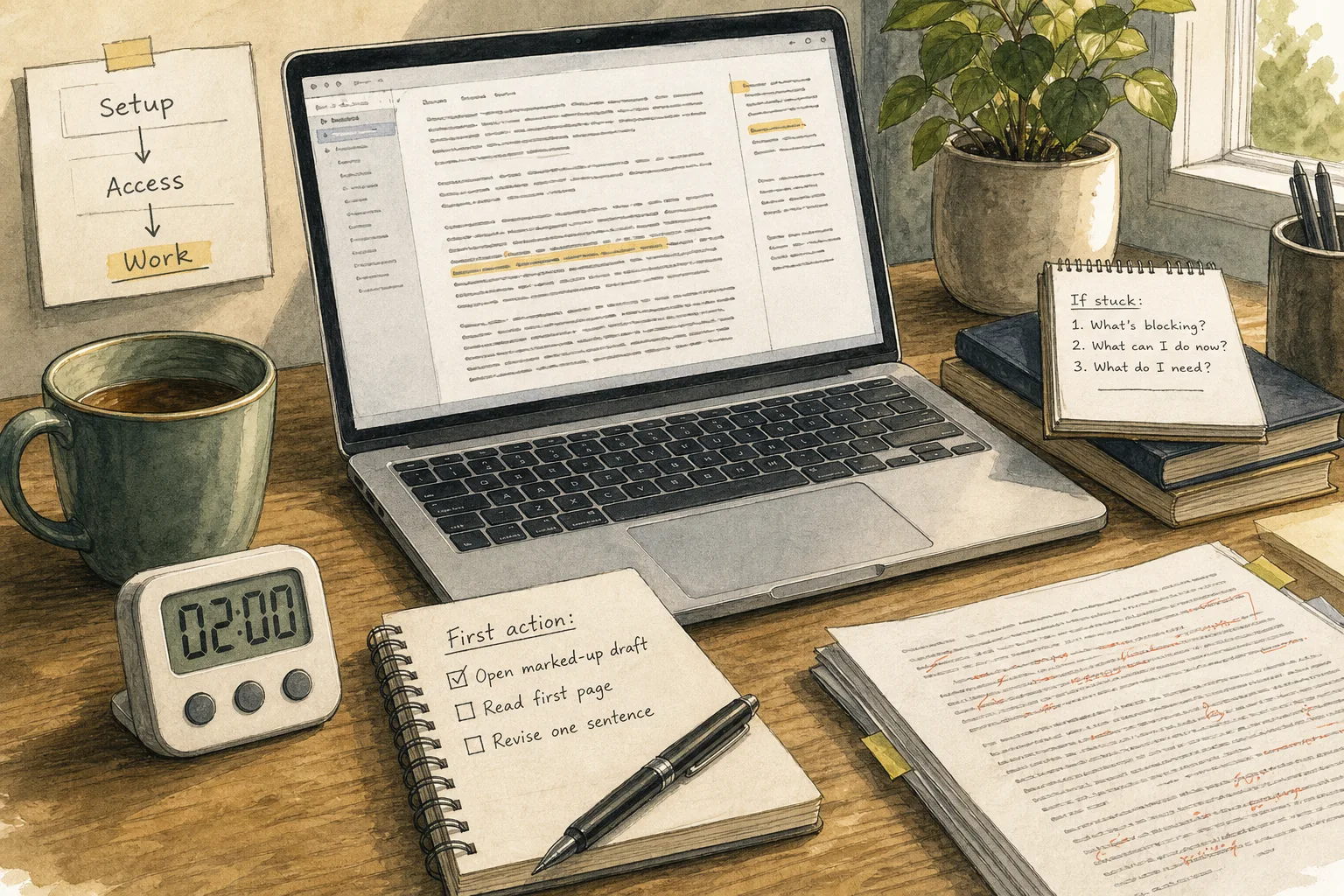
The document is open, the kettle has boiled, and your hands are still off the keyboard. A two-minute starting ritual gives that pause a clear edge: choose one small action, bring the needed material within reach and begin the work itself.
Two minutes is a boundary for starting, not a forecast of how long the task will take. Like a kitchen timer for toast, it keeps getting ready from quietly taking over the morning. A timer is optional; you can estimate the boundary with a clock or simply use it as a brief cue to start.
How do you use a two-minute starting ritual?
When you sit down, choose one action that belongs to the task. The aim is not to make a miniature plan, but to move from looking at the work to handling it.
- Name the first move. Write a concrete action, such as “open the marked-up draft” or “read the first page of the brief”.
- Bring the needed material within reach. Open the relevant file or place the printout beside your keyboard. Skip anything that does not directly enable the first move.
- Make contact with the work. Read a passage, edit a sentence or write a rough line. At the end of the short interval, decide whether to continue or pause; the ritual itself is complete.
If you cannot name an action, identify the specific information or decision you need before work can proceed. Open the relevant source, or draft a concise question for the person who can answer it. Keep the ritual focused on the work’s entry point, rather than turning it into a general organising session.
Where does setup end and work begin?
Setup makes the task accessible: opening a document, finding a marked page or placing a reference beside you. Work means reading, changing or creating something that belongs to the task. If you are still arranging windows when your chosen interval ends, close the setup and make one small move on the work itself.
Say you have a draft to revise, a marked-up printout beside your laptop and an inbox filling with new messages. You open the draft and revise one awkward sentence. The sentence changes; the messages remain separate items to handle at a suitable time, rather than dictating what you do next.
How can you begin without turning this into a planning session?
Use the ritual to enter one piece of work, not to rank everything waiting for you. Choose the task already in front of you or the one you have been asked to begin, then identify the first action that changes or clarifies that work.
If the action depends on something unavailable, make the dependency explicit. You might write the exact question a colleague needs to answer, or read the source material you already have. That keeps the starting ritual tied to the task’s substance, rather than creating another system to maintain.
What should you do when the two-minute starting ritual hits a snag?
Let the obstacle determine the next useful action. Check what is actually blocking the work, then choose a response that fits what you have available.
- If your note names no clear action, check whether it describes a visible change to the work; if it does not, rewrite it as one physical move, or name the specific decision you need to make.
- If the needed file is not open, check whether you know its name or location; if you do, open it, and if you do not, use an accessible source or record what information is missing.
- If a tool or response is missing, check whether another part of the task can proceed; if it can, begin there, and if it cannot, draft a direct request for the missing item.
- If an interruption arrives before you begin, check whether it requires an immediate response; if it does, handle it and return when able, and if it does not, leave it for an appropriate time and start the chosen action.
- If your interval ends while you are working, check whether you have made a genuine task-related change; if you have and circumstances allow, continue, and if you are still preparing, stop arranging and make the first work-related move.
- If the planned action no longer applies, check whether the instructions or source material have changed; if they have, consult the current version and choose a relevant action, and if they have not, return to the original action.
What do readers ask about the two-minute starting ritual?
Does the timer need to be exact?
No. A phone, kitchen timer or clock can make the boundary visible, but none is essential. If you do not have one nearby, estimate a short interval and begin when it has passed.
What if the task takes longer than two minutes?
The ritual covers the start, not the whole task. Continue if you are able; if you need to stop, leave a note naming the next task-related action so you can resume without reconstructing your starting point.
Should I choose the task the night before?
You can, but that choice sits outside the ritual. If the work changes overnight, consult the current instructions or material before choosing the action that fits the task now.
Can I use the ritual after a meeting or interruption?
Yes. When you return, check whether the task has changed, then choose its next relevant action. If new instructions have arrived, use those rather than relying on an outdated plan.
How can you tell whether the ritual is helping?
Look at what happens before the interval ends: have you handled the task itself, or are you still arranging the setup? If setup keeps taking over, remove one preparatory action, such as opening every reference before you begin, and start with the material needed for the first move.
A two-minute starting ritual is useful when it brings the work within reach without demanding a special app or a polished plan. Keep the boundary flexible, but make the first action concrete: when the setup is done, the next decision should belong to the work.
Keep the thread going
The Three-Item Shortlist for a Crowded Task List
A three-item shortlist helps you choose meaningful work from a crowded task list by weighing deadlines,…
A Flexible Weekly Plan That Leaves Room to Think
A flexible weekly plan helps you place work around real commitments, make transitions visible and keep…