A Flexible Weekly Plan That Leaves Room to Think
A flexible weekly plan helps you place work around real commitments, make transitions visible and keep open space useful when the week changes.
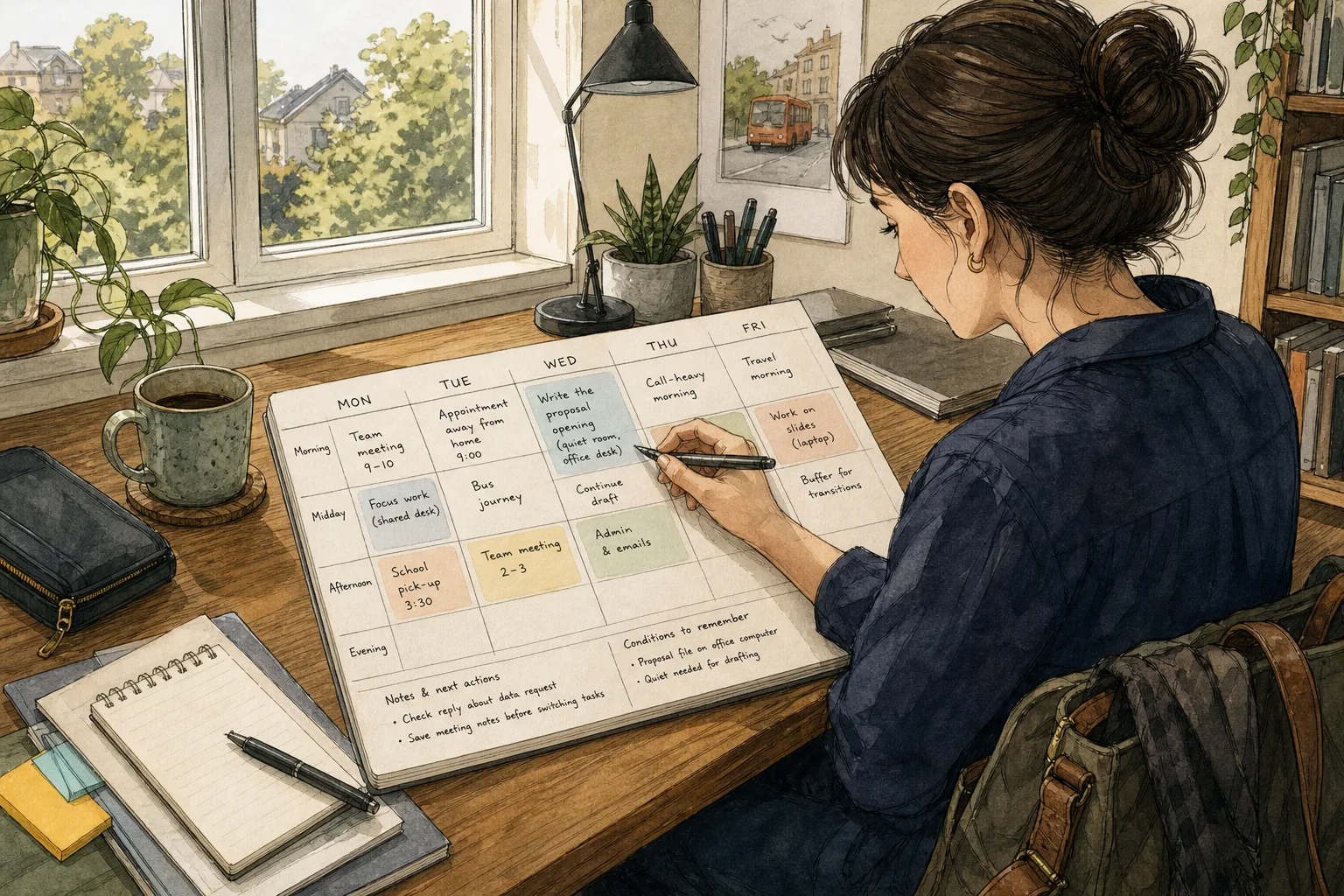
On Monday morning, your calendar shows a team meeting, a school pick-up and a blank stretch of afternoon. A flexible weekly plan helps you decide what that space is for without quietly turning every gap into work.
The point is not to assign a task to every hour. It is to make visible the conditions that shape your attention: where you will be, what materials you can reach and when a change of setting may interrupt your train of thought. Think of the calendar as a coat rack: it holds what belongs there, but it becomes harder to use when packed too tightly.
What should a flexible weekly plan make visible?
Start with commitments that affect your location or availability, such as appointments, meetings, school pick-up and travel. Add practical constraints that may shape the day: a shared desk, a call-heavy afternoon or a document available only on your work computer.
Instead of treating the calendar as a catalogue of tasks, use it to show when a particular condition matters. A note such as “quiet room for proposal draft” records what the work needs without claiming that every open stretch is suitable. Keep the wording short and name the first action, such as “write the proposal opening”.
Leave some time visibly unassigned when you need room for transitions, interruptions or a pause. A blank area is not necessarily spare capacity; its purpose may be to keep the rest of the day workable.
How can a work block fit its setting?
Match the work to what will be available. Drafting may call for quiet and access to a shared document, while sorting paper notes may be possible at a different desk. Note the location or tool only when it changes what you can begin.
Make transitions legible when they affect the next task. Moving from a meeting to another site may involve travel; finishing a call may mean saving notes before switching to a different piece of work. If the transition does not need its own calendar entry, leave breathing room around it rather than implying that switching happens instantly.
Say your Tuesday begins with an appointment away from home, includes a bus journey, and ends with a team meeting after lunch. You need to draft a proposal and have access to its shared file only at your office desk. You enter the appointment, journey and meeting, then place “write the proposal opening” in a quiet Wednesday morning slot at that desk. The result is a plan that identifies a workable starting point while leaving Tuesday’s interrupted stretches open.
What should you check when the week changes?
What belongs in a calendar entry?
Check whether the event has a fixed time, place or dependency, such as a meeting, travel or access to a particular device. If it does, show that condition in the calendar; if not, keep the entry brief or leave the detail in your working notes.
How should you handle a task that depends on a reply?
Check whether the reply has arrived and whether it changes the next action. If it has arrived, update the work note with the action now possible; if it has not, leave the dependent task unplaced and record what you can do while waiting.
What is a useful way to protect a transition?
Check what must happen between two commitments, such as travel or saving meeting notes. If that work would otherwise be squeezed out, make the transition visible; if it is already covered, leave the surrounding space open rather than adding another label.
What should happen to a block that no longer fits?
Check whether the location, materials or quiet needed for the task are still available. If they are, keep the block and revise its first action if needed; if not, remove it from that slot and return the task to your planning notes until a fitting opening appears.
How can a weekly plan reflect different work settings?
For a week split between home and an office, note which work needs a particular device, file or quiet setting. A task that depends on an office desktop may not be a useful choice during a day spent elsewhere, even if the calendar appears empty.
When the week involves travel or shared schedules, make known constraints visible and leave uncertain stretches open. During a steadier week at one desk, you may be able to reserve a longer period for work that benefits from continuity. The plan records conditions you can anticipate; it need not predict every interruption.
How can you revise the plan without rebuilding it?
When a commitment moves, update its time and location, then check whether nearby work still has the setting it needs. If a block no longer fits, remove it from that position and note the next action elsewhere rather than copying the same entry forward unchanged.
When a new request arrives, check whether it brings a fixed appointment, location or dependency. If it does, record that constraint and review anything it displaces; if it does not, write down the next action and leave the existing plan intact for now.
At the end of a workday, identify what made a task difficult to start: missing material, an unsuitable place, an interruption or a vague first action. If the location was the problem, choose another setting when you next review the week; if the task was unclear, rewrite its opening action before placing it again.
Near the end of the week, look for repeated clashes between a task and its setting. If proposal drafting keeps landing during noisy periods, place the next opportunity where quiet is more likely; if travel repeatedly disrupts a transition, make that movement visible. A flexible weekly plan is most useful when it reflects the conditions you know and leaves room for those you cannot control.
Before closing the calendar, ask what each blank stretch is doing. It may be available for a task, or it may protect a transition or give a demanding day room to breathe. Keeping that distinction in view makes a flexible weekly plan easier to adapt without treating every open space as an invitation to add work.
Keep the thread going
The Three-Item Shortlist for a Crowded Task List
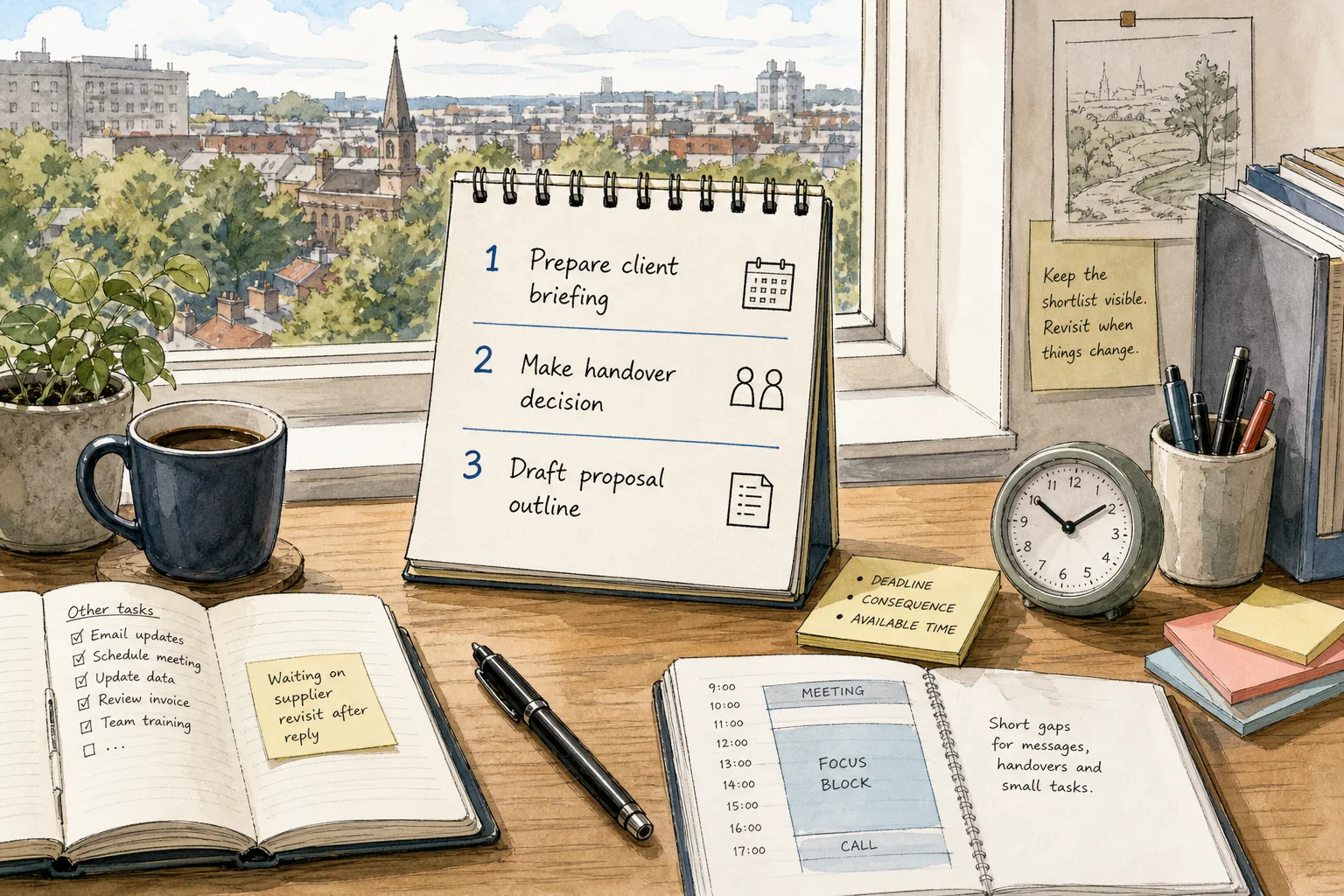
A three-item shortlist helps you choose meaningful work from a crowded task list by weighing deadlines,…
The Paper Parking Lot for Thoughts That Interrupt
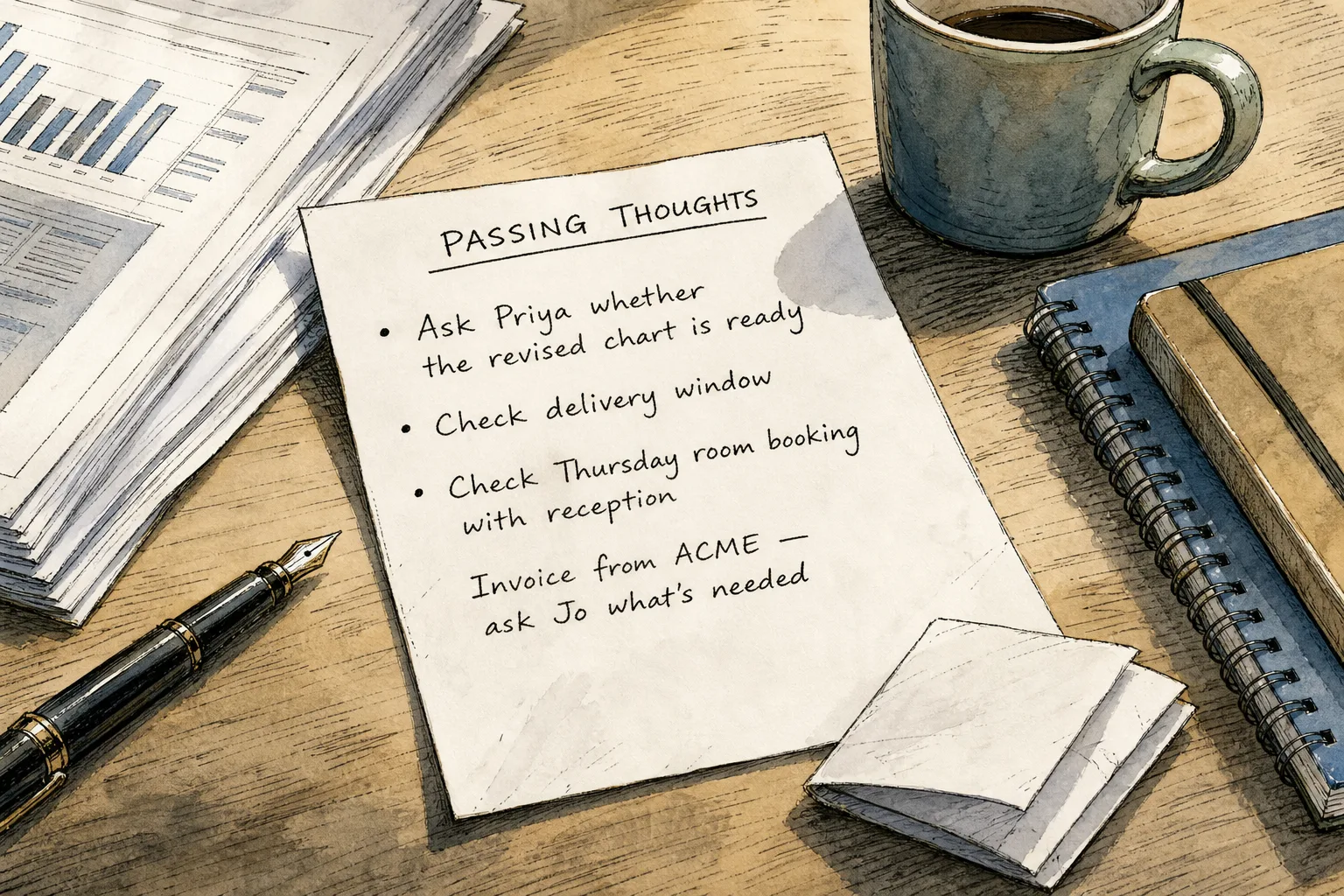
A paper parking lot for distracting thoughts gives stray ideas a place to wait, helping you…